Greenway Insect Control provides scientific, low-impact pest control services in San Diego to resolve acute residential pest outbreaks without saturating living spaces in broad-spectrum synthetic neurotoxins. Homeowners seeking professional pest control near me receive tailored botanical and micro-barrier treatments engineered for local coastal pest pressures.
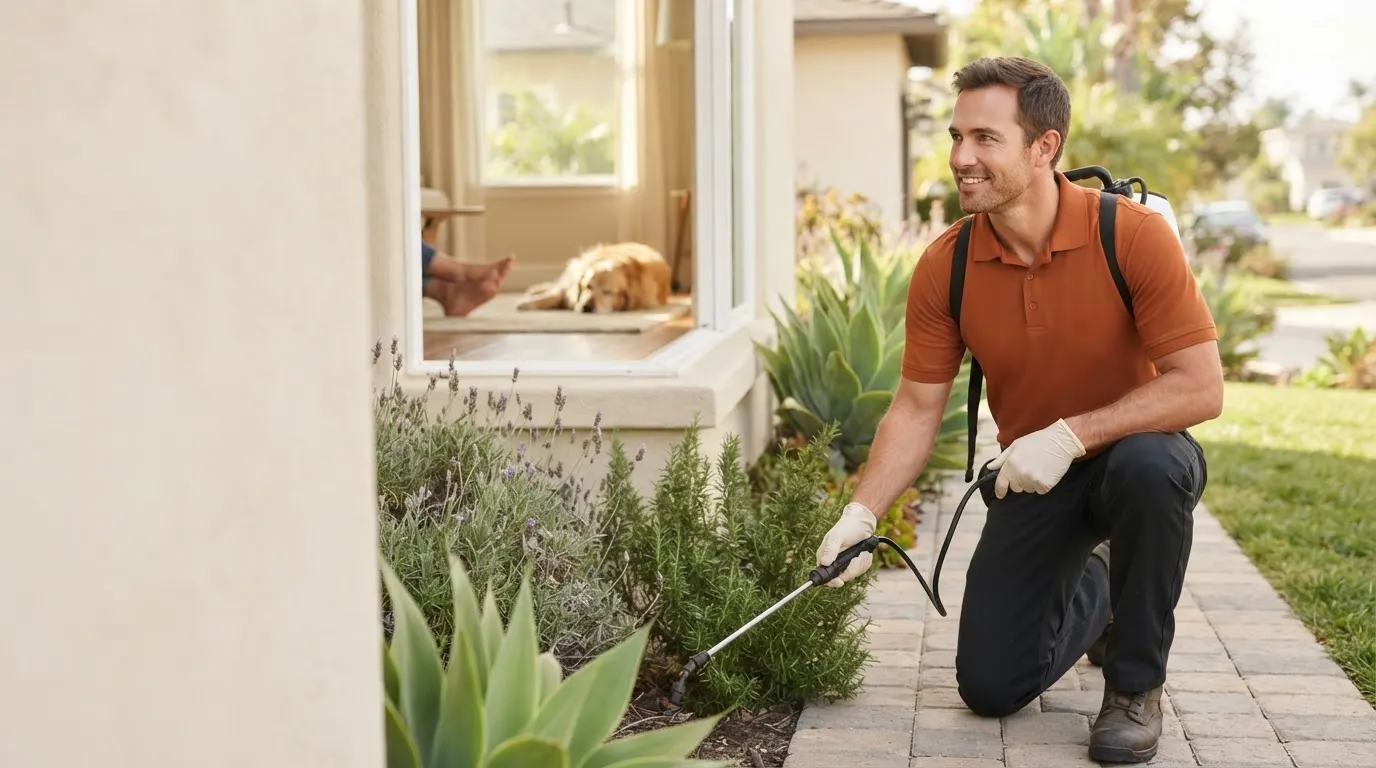
Pest control services company in San Diego is a certified biological and structural pest management service that protects residential structures and domestic environments from invasive regional insect and rodent populations.
Every service reflects the same meticulous attention to detail, whether it's a single job or a larger pest control services project across San Diego.
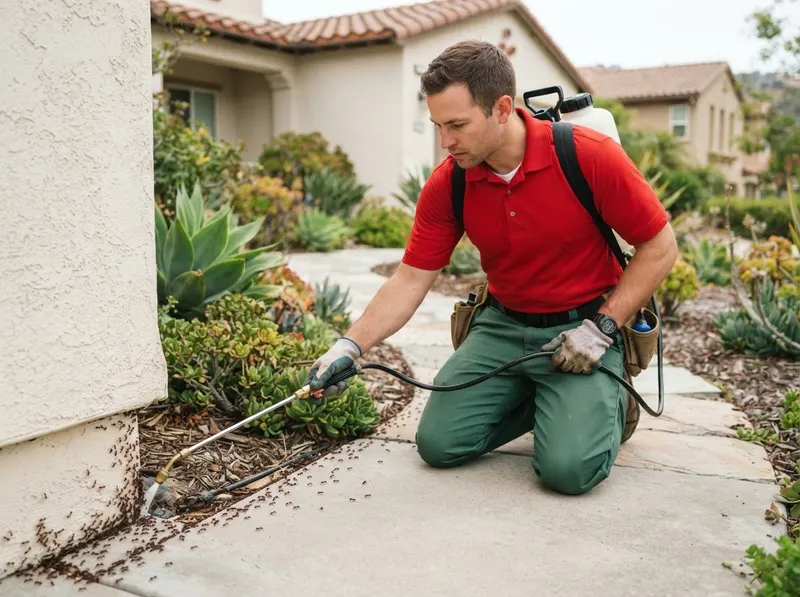
Argentine ants (Linepithema humile) establish multi-queen mega-colonies across San Diego canyon slopes. DIY repellent barrier sprays trigger bud-nesting, where single colonies split into multiple independent reproductive units throughout interior wall cavities. Greenway Insect Control uses slow-acting non-repellent liquid micro-barriers and carbohydrate attractants formulated under EPA pesticide environmental standards . Foraging workers ingest the formulation and pass it through trophallaxis to hidden reproductive queens, eliminating sub-slab nests within 14 to 21 days.
Get a quote →
Coastal structures face constant pressure from drywood termites (Incisitermes minor) that enter exposed fascia, eaves, and attic rafters during late-summer heat cycles. Certified Branch 3 inspectors examine exposed timbers using fiber-optic borescopes and acoustic listening sensors. Infested structural timbers receive direct drill-and-inject treatments using essential tree oils like orange oil extracts or localized chemical termiticides, arresting gallery excavation without requiring household tenting, off-site moving costs, or overnight stays.
Get a quote →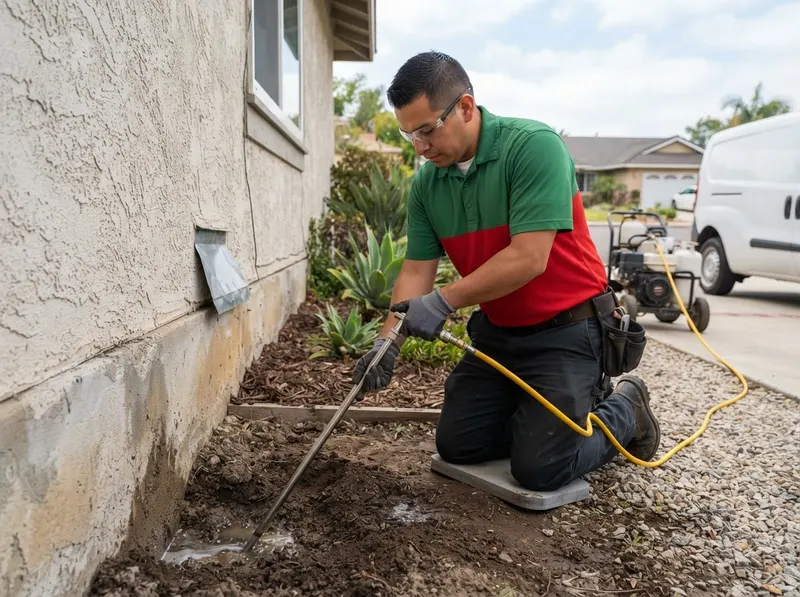
Subterranean termites (Reticulitermes hesperus) enter structures through hairline foundation cracks, construction expansion joints, and plumbing penetrations in contact with damp soil. Field technicians apply targeted non-repellent liquid barriers to perimeter foundation soils in accordance with the California Structural Pest Control Board regulatory statutes. Alternatively, technicians install tamper-resistant sub-soil bait stations at 10-foot intervals to intercept foraging subterranean workers before they establish moisture mud tubes across structural masonry.
Get a quote →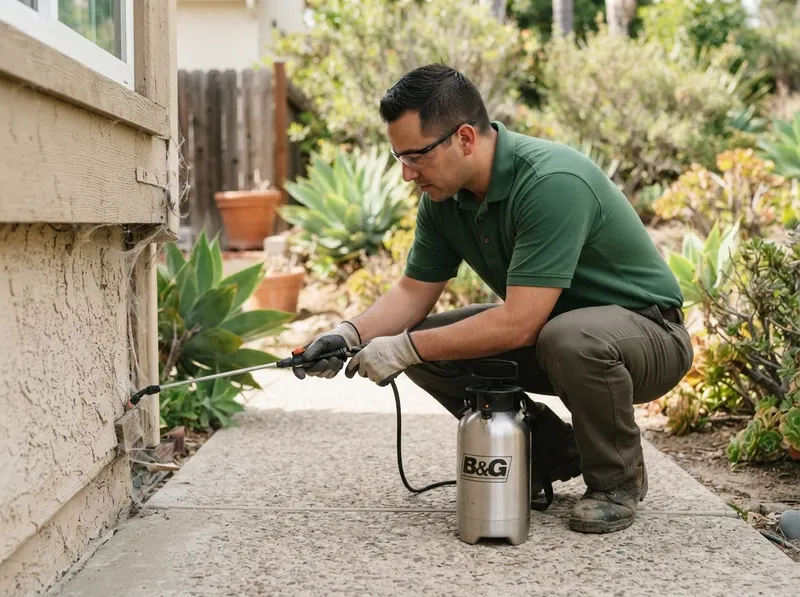
Western black widows (Latrodectus hesperus) build irregular webbing in dry, dark utility boxes, irrigation enclosures, garage recesses, and under patio overhangs. Technicians mechanically clear accessible webbing and egg sacs using microfiber telescoping de-webbing poles up to 24 feet high. Technicians then apply micronized botanical pyrethrin dusts within weeping holes, masonry voids, and external perimeter expansion joints to repel re-infestation while preserving harmless natural predatory garden insects.
Get a quote →
Roof rats (Rattus rattus) exploit San Diego's dense canyon brush and suburban citrus canopies, navigating along power lines to breach attic vents, tile roof dormers, and crawlspaces between November and February. Greenway Insect Control seals architectural entry gaps larger than 0.25 inches with 19-gauge galvanized wire hardware cloth and high-density copper mesh. Technicians position snap traps within non-living attic zones, checking and clearing them over 10-day cycles without placing exterior anticoagulant poisons that threaten local raptors, coyotes, or domestic pets.
Get a quote →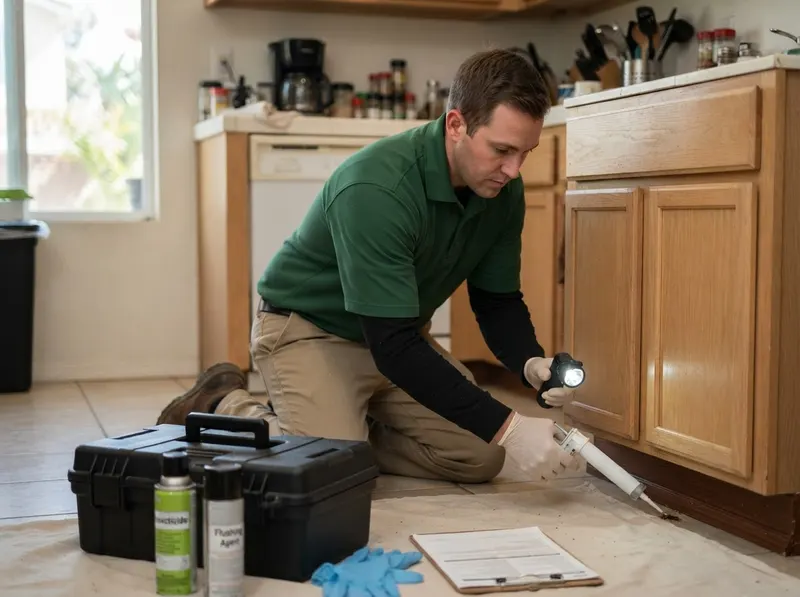
German cockroaches (Blattella germanica) infest kitchens, pantries, and moisture hubs inside appliances. Treatments utilize low-toxicity insect growth regulators (IGRs) combined with targeted abamectin and hydramethylnon matrix baits applied in hidden mechanical cracks. The active ingredients interrupt juvenile nymph molting cycles and target reproductive ovaries, collapsing the population while preventing airborne chemical contamination around family kitchen prep zones and household pantries.
Get a quote →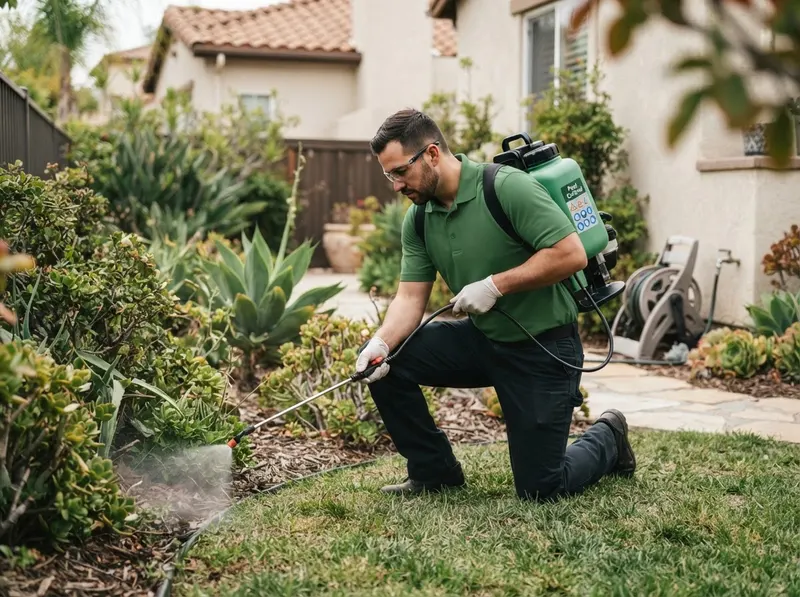
Coastal marine humidity and mild winter temperatures allow cat flea (Ctenocephalides felis) populations to breed outdoors year-round across coastal lawns and ground cover. Technicians apply targeted horticultural insect growth regulators and botanical soap concentrates to shady pet lounging areas, perimeter foundation soil, and fence lines. This application sterilizes developing flea larvae and pupae within shaded yard debris without introducing persistent organophosphate residues into household runoff channels.
Get a quote →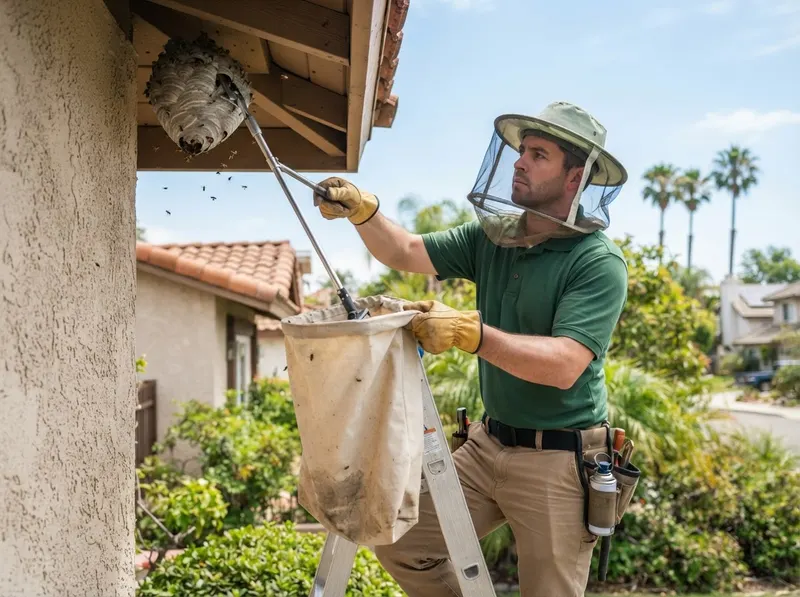
Paper wasps (Polistes dominula) and yellowjackets construct hanging fibrous cellulose nests beneath roof eves, entry awnings, and elevated decking boards from April through September. Technicians execute direct aerosol freeze knockdowns, followed by physical nest detachment and mechanical scraping of the anchoring pedicle. Exterior entry surfaces receive a residual botanical repellent wash that deters surviving fertile queens from re-attaching new nesting paper on the same architectural anchor points.
Get a quote →You get a firm, itemized quote for your pest control services before any work begins, no surprises, no pressure.
Careful prep, tidy work, and a full cleanup when we are done. We treat your home and belongings like our own.
The same trusted, background-checked team from the first call to the final check.
Selecting appropriate residential treatments requires evaluating whether the target insect nests inside wall voids or outside in native soils. For exterior soil-dwelling invaders like the Argentine ant, choosing a perimeter non-repellent transfer treatment provides colony-wide eradication, whereas using a repellent consumer spray merely fractures the colony into multi-queen satellite nests. If you are dealing with seasonal drywood termites, localized thermal or botanical precision injection avoids whole-structure chemical fumigation; if you have deep structural subterranean termites, installing external bait stations creates long-term subterranean suppression without trenching foundation slabs.
The trade-off is mechanical duration versus intervention breadth: precision localized treatments require rigorous initial inspection and direct access to infested framing timbers, whereas whole-structure approaches disrupt household occupancy for multiple days. When evaluating rodent management, choosing physical structural exclusion combined with targeted mechanical trapping preserves domestic pet safety and local wildlife food chains, whereas deploying exterior rodenticide bait boxes introduces secondary toxicity risks for native predators such as hawks and owls. For wood-decay fungi and subterranean dampwood termites, correcting grading and subfloor ventilation defects serves as the permanent biological corrective, whereas chemical soil treatments act as an external protective boundary that requires ongoing monitoring.
Selecting mechanical sealing using 19-gauge wire mesh paired with non-toxic botanical dusts in dry structural voids gives homeowners long-term insect deterrence without off-gassing synthetic residues into household bedrooms, pantries, and living areas.
Every project gets a firm, written price after a free on-site visit. Ranges below for orientation.
Tell us about your pest control services job and we'll send a clear, written quote, usually the same day. Or just call and talk to a real San Diego pro.
(858) 206-2015
San Diego County encompasses complex microclimates ranging from cool coastal fog zones to arid inland valleys cut by hundreds of wild coastal canyons. These riparian corridors act as natural wildlife highways, channeling roof rats and Argentine ant supercolonies directly into adjacent residential properties across Point Loma, North Park, and Carmel Valley. In neighborhoods bordering Balboa Park, Tecolote Canyon, and Mission Bay, excessive exterior applications of synthetic pyrethroids risk washing directly into fragile storm drains and marine habitats during winter rain surges. Greenway Insect Control formulates low-impact treatment protocols designed to preserve vulnerable coastal marine watersheds, preventing persistent synthetic pesticide runoff into Mission Bay and coastal lagoons while maintaining complete structural pest defense.
Free estimates for San Diego & the surrounding area.
For standards, safe disposal, and service guidance on pest control services in San Diego, CA, useful references include U.S. EPA, ENERGY STAR, U.S. Dept. of Energy, Consumer.gov, U.S. Census Bureau, and Google Maps. General consumer and small-business resources are available from USA.gov, Better Business Bureau, FTC Consumer Advice, U.S. Small Business Administration, and Ready.gov.
 Greenway Insect Control