A flea and parasite yard micro-barrier addresses the environmental reservoirs where ectoparasites flourish before latching onto pets or entering residences. In coastal and mesa neighborhoods across San Diego County,…
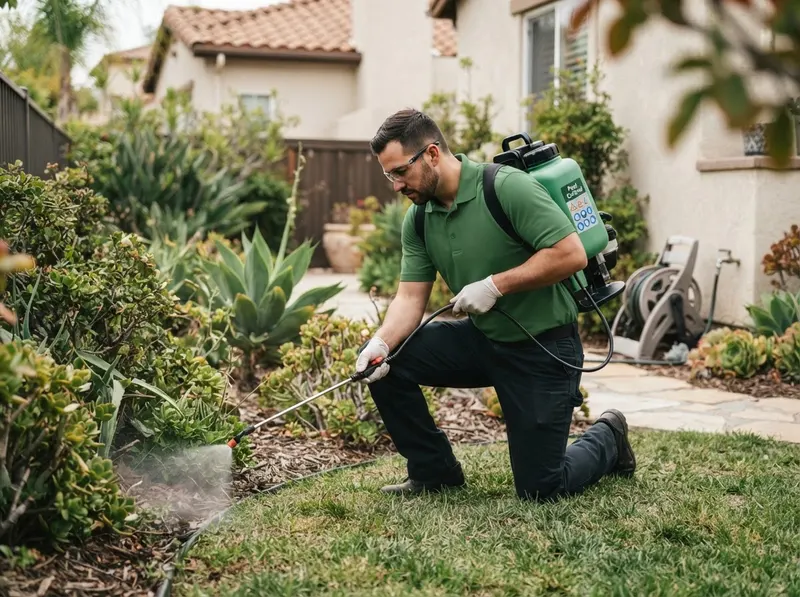
A flea and parasite yard micro-barrier addresses the environmental reservoirs where ectoparasites flourish before latching onto pets or entering residences. In coastal and mesa neighborhoods across San Diego County, including canyon perimeters in Clairemont, marine-layer microclimates in Pacific Beach and Ocean Beach, and inland turf conditions in Carmel Valley, parasites thrive in shaded exterior microhabitats. While indoor vacuuming and veterinary medications manage current hosts, 95% of a flea population exists outdoors as eggs, larvae, and pupae in soil, leaf litter, and mulch beds. The yard micro-barrier establishes a physical and biochemical line of demarcation along property boundaries, fence lines, crawl space vents, and turf-to-patio transitions, interrupting egg hatching and larval molting without saturating living spaces.
Outdoor flea and parasite management aligns with specific property layouts and environmental exposure. Single-family parcels bordering coastal sage scrub in Point Loma or canyon washes in Mira Mesa face continuous parasite reintroduction from urban wildlife such as raccoons, opossums, and feral cats. Choosing a targeted micro-barrier suits homes with shaded dog runs, ground-cover vegetation, or raised decks where wildlife beds down. The mechanical trade-off rests between surface coverage and longevity: liquid botanical micro-emulsions adhere to exterior foliage and topsoil immediately, whereas granular moisture-activated insect growth regulators require targeted soil penetration to reach subterranean larvae sheltered beneath decomposed granite or wood chips. Treatment avoids hardscape runoff, preserving local marine drainages feeding Mission Bay and the San Diego River basin.
Greenway Insect Control executes outdoor parasite management in structured stages. 1. Technicians survey property perimeter lines, measuring shade canopy density and marking active pet rest zones. 2. Low-pressure application distributes an exterior botanical formulation combined with an insect growth regulator across soil and mulch zones, meeting guidelines from the California Structural Pest Control Board. 3. Targeted micro-misting directs treatments underneath patio steps, exterior storage areas, and fence perimeters. 4. Property owners receive specific moisture management instructions to limit fungal development that shelters flea larvae, in alignment with standards maintained by the UC Statewide Integrated Pest Management Program. 5. Follow-up monitoring verifies that the larval development barrier remains unbroken across seasonal warmth shifts.
Every job gets a firm, written price after a free on-site visit.
For standards, safe disposal, and service guidance on pest control services in San Diego, CA, useful references include U.S. EPA, ENERGY STAR, U.S. Dept. of Energy, Consumer.gov, U.S. Census Bureau, and Google Maps. General consumer and small-business resources are available from USA.gov, Better Business Bureau, FTC Consumer Advice, U.S. Small Business Administration, and Ready.gov.
Tell us about your flea and parasite yard micro-barrier job in San Diego and we'll send a clear, written quote, usually the same day.
 Greenway Insect Control